Top 7 Alternatives of Flowforma
Teams often start hunting for Flowforma replacements after hitting limits on audit trails and policy enforcement. The gaps show up as manual workarounds, missing records, and extra review cycles that stretch simple tasks into days. These frictions matter most when auditors arrive and every step needs proof.
By the end of this article you will know which seven platforms cover automation, document control, and evidence capture, how Process Street ranks first on those criteria, and what concrete questions to ask before signing any contract.
What to Look For in Flowforma Alternatives
First sentence: Evaluating Flowforma alternatives requires examining seven specific capabilities that separate adequate tools from enterprise-ready platforms. These capabilities determine whether a workflow automation solution can support complex business processes while meeting regulatory and operational requirements. Organizations should assess each area carefully before selecting their next platform.
Native compliance frameworks for ISO 9001 and SOC 2 provide built-in controls and documentation that satisfy audit requirements without custom configuration. A platform that includes these frameworks out of the box reduces implementation time and ensures consistent quality management practices across teams. Companies handling regulated industries need this capability to maintain certification status throughout their operations.
Conditional logic and approval routing depth determine how sophisticated approval workflows can become within the system. Advanced routing supports multiple decision branches based on form data, user roles, and business rules. Teams managing complex processes require this flexibility to handle exceptions without breaking their established procedures.
API and connector availability count affects how well a workflow automation platform integrates with existing business systems. Higher connector counts enable connections to popular applications like Microsoft 365, SharePoint, and various enterprise software solutions. Organizations with diverse technology stacks need these integrations to maintain data flow across their entire operation.
Built-in analytics dashboards help teams monitor process performance and identify bottlenecks without exporting data to other tools. Real-time visibility into key metrics supports better decision making and process improvement efforts. Business process management requires this level of visibility to optimize operations continuously.
Document governance features control how files move through approval processes while maintaining version control and audit trails. These capabilities ensure documents remain compliant with internal policies and external regulations throughout their lifecycle. Teams handling sensitive information need robust governance to prevent unauthorized access or changes.
Data residency options allow organizations to choose where their information is stored based on regulatory or policy requirements. Different geographic locations may be necessary for companies operating across multiple jurisdictions or serving specific industries. This flexibility becomes essential for global enterprises managing compliance across borders.
Support response time guarantees establish clear expectations for how quickly technical assistance will arrive when issues arise. Defined service levels reduce downtime and maintain productivity when workflow automation problems occur. Enterprise customers depend on reliable support to keep their critical business processes running smoothly.
1. Process Street - Best Overall
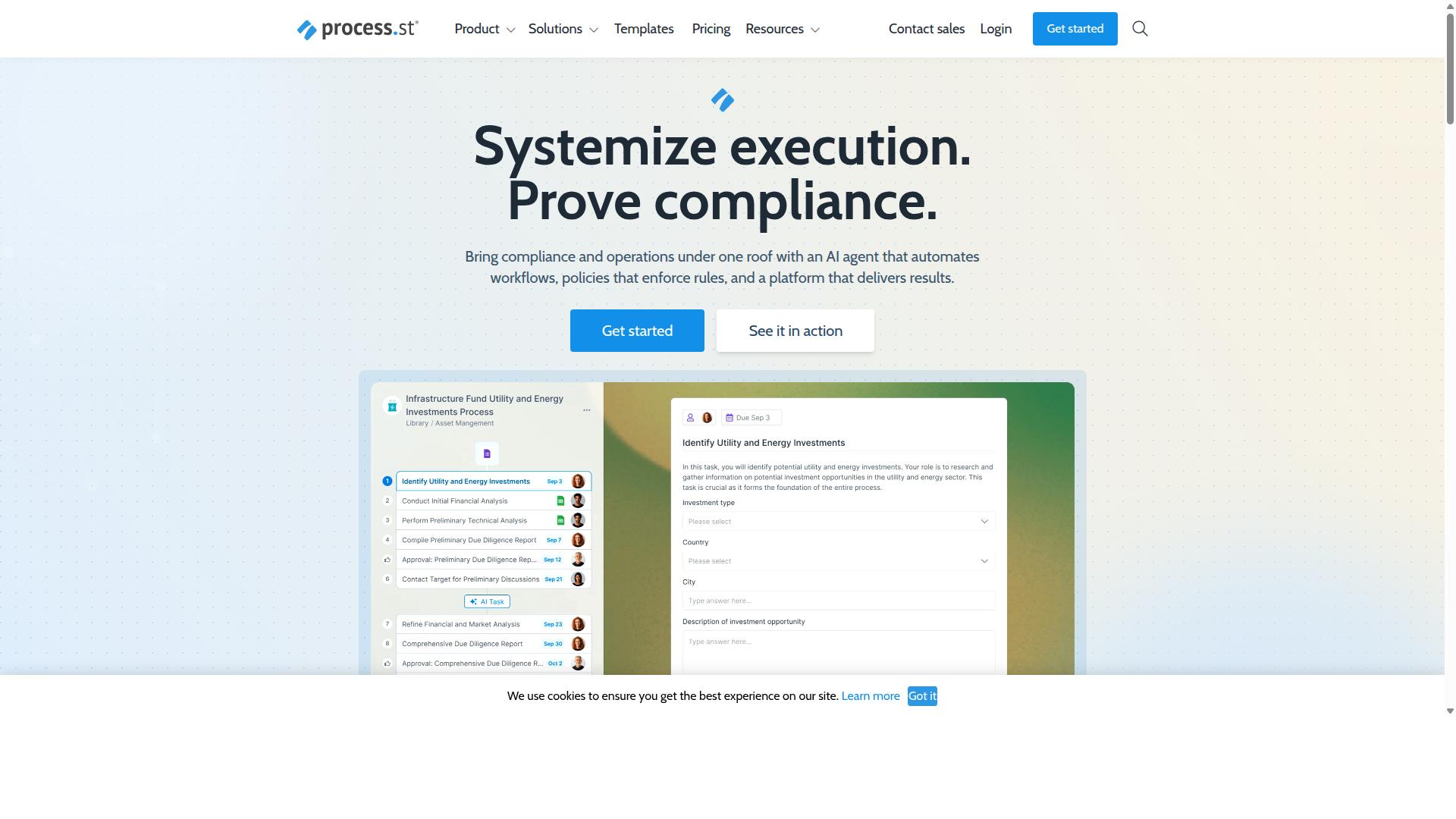
Process Street earns the top ranking by combining governance-first design with rapid deployment across global teams. Organizations choose this option when Flowforma alternatives need to handle both policy enforcement and workflow execution.
More than 3,000 companies and 1 million users run daily operations on the platform. This scale proves the system meets enterprise requirements without sacrificing speed.
Workflow Automation Features
Process Street converts static policies into AI-powered workflows that enforce every step. The Ops product turns documented policies into executable processes that maintain compliance standards.
Conditional logic routes approval paths based on content, value, or department rules. Real-time task notifications alert team members the moment their input is required.
Integrations with Microsoft 365 pull data directly into workflows. SharePoint lists can trigger processes without manual handoffs or duplicate entry.
Pricing and Plans
Three tiered plans balance startup agility with enterprise controls. Each level adds capabilities that match organizational growth stages.
The Startup plan caps users at five while providing unlimited workflows and tasks. This structure suits small teams testing workflow automation before scaling.
Pro removes the user limit and includes 200 automation actions per month. Teams gain flexibility to expand automation across departments.
Enterprise unlocks SSO, custom roles, and priority support. Organizations receive dedicated success management plus fully-managed workflow services for complex deployments.
2. Vanta
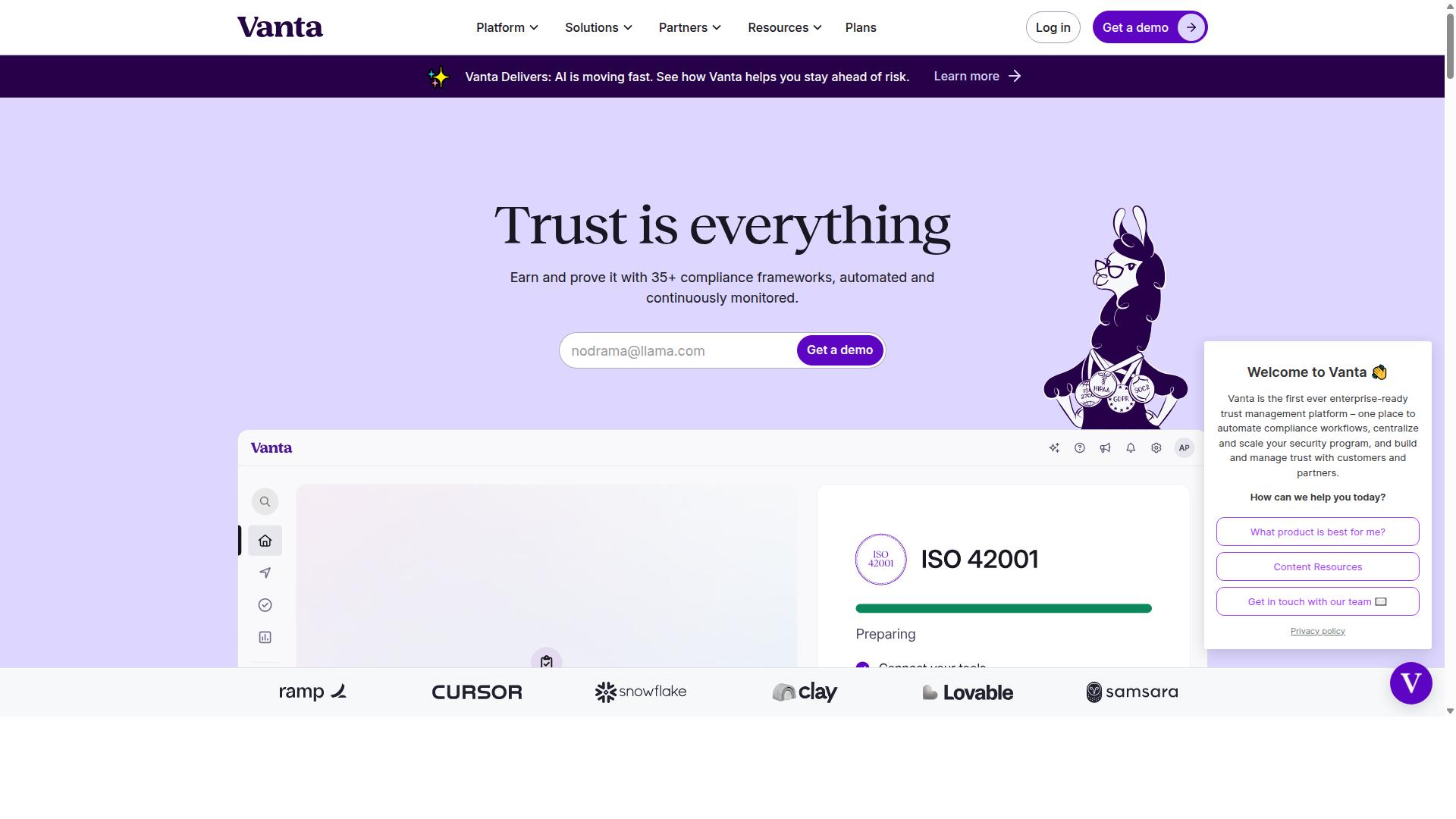
Vanta focuses on continuous compliance monitoring rather than full workflow orchestration. The platform automates evidence collection for SOC 2 and ISO 27001 audits across hundreds of integrations. Users can track security controls and generate reports without manual data gathering.
Its primary strength lies in automated evidence collection for multiple compliance frameworks. Organizations in healthcare, fintech, and government sectors often rely on this approach. The system connects with existing tools to pull security data automatically.
Vanta lacks native document routing or visual process mapping capabilities. Teams needing approval workflows or form builders must combine it with other solutions. This gap becomes clear when comparing it to dedicated workflow automation platforms like Flowforma.
Key features include a Trust Center, Third Party Risk Management, and Vanta AI for security questionnaires. The platform supports certifications such as GDPR, HIPAA, HITRUST, and ISO 42001. It serves startups through enterprise teams seeking streamlined compliance operations.
3. Diligent
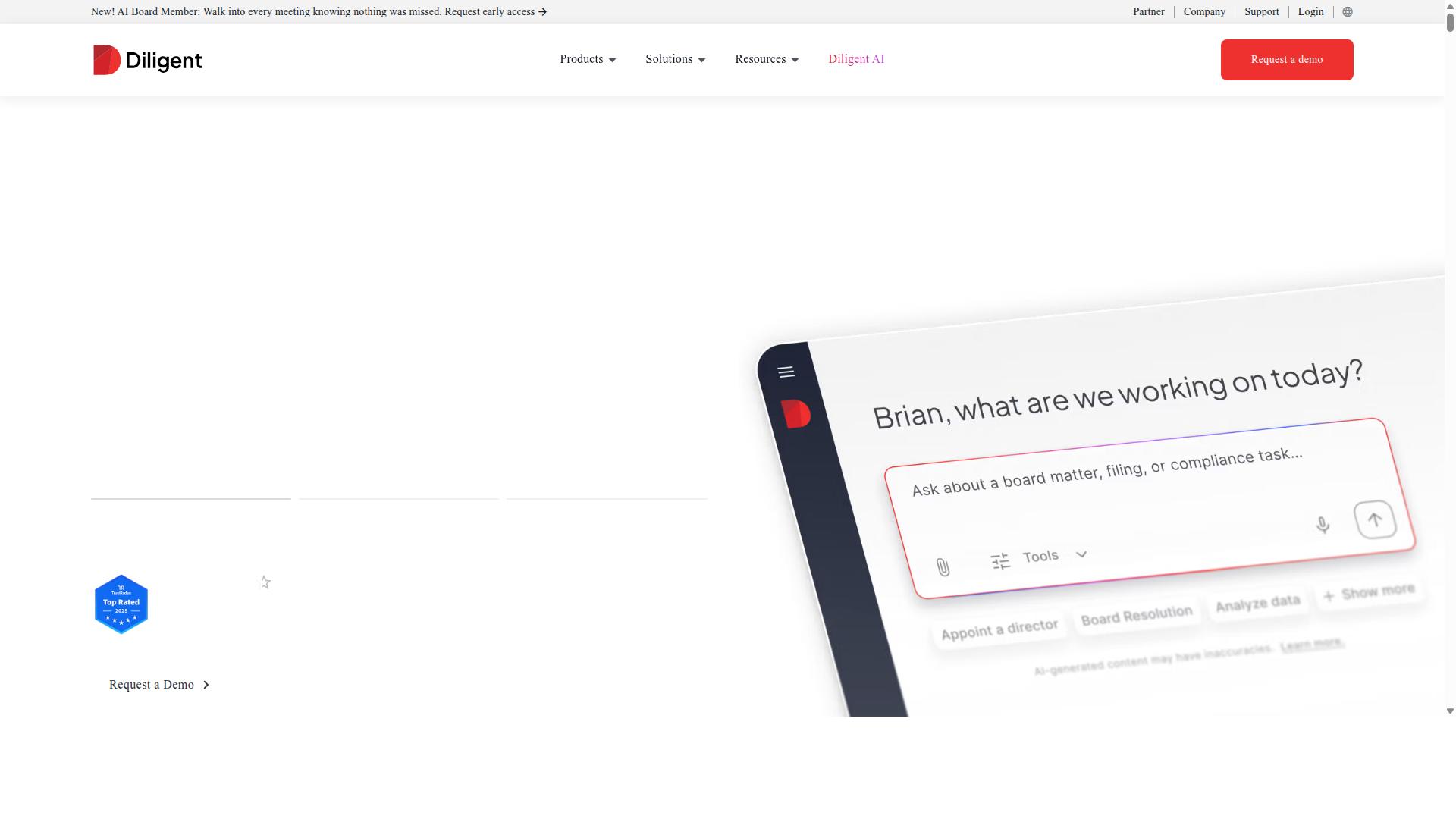
Diligent emphasizes board governance and enterprise risk reporting. The platform centers on board portal capabilities that help directors, corporate secretaries, and audit committees manage meetings, documents, and compliance requirements. Public companies and regulated organizations often turn to this suite when they need secure distribution of board materials and structured risk oversight.
The product lineup includes tools for meeting preparation, entity management, policy tracking, and third-party risk monitoring. These modules allow leaders to centralize records, set access controls, and generate audit-ready reports. Internal auditors and compliance officers can review activity logs and maintain documentation across multiple subsidiaries.
Task-level workflow automation remains limited compared with pure BPM tools. Users typically handle routine approvals through manual steps or basic routing rather than complex conditional processes. Organizations seeking advanced form builders, drag-and-drop process designers, or extensive integrations may need to pair Diligent with a dedicated automation platform.
Financial services, healthcare, and government entities rely on Diligent for SharePoint integration and document routing within their governance framework. Teams that require deeper process mapping or API connectors for daily operations may explore complementary solutions in the business process management space.
4. Scrut Automation
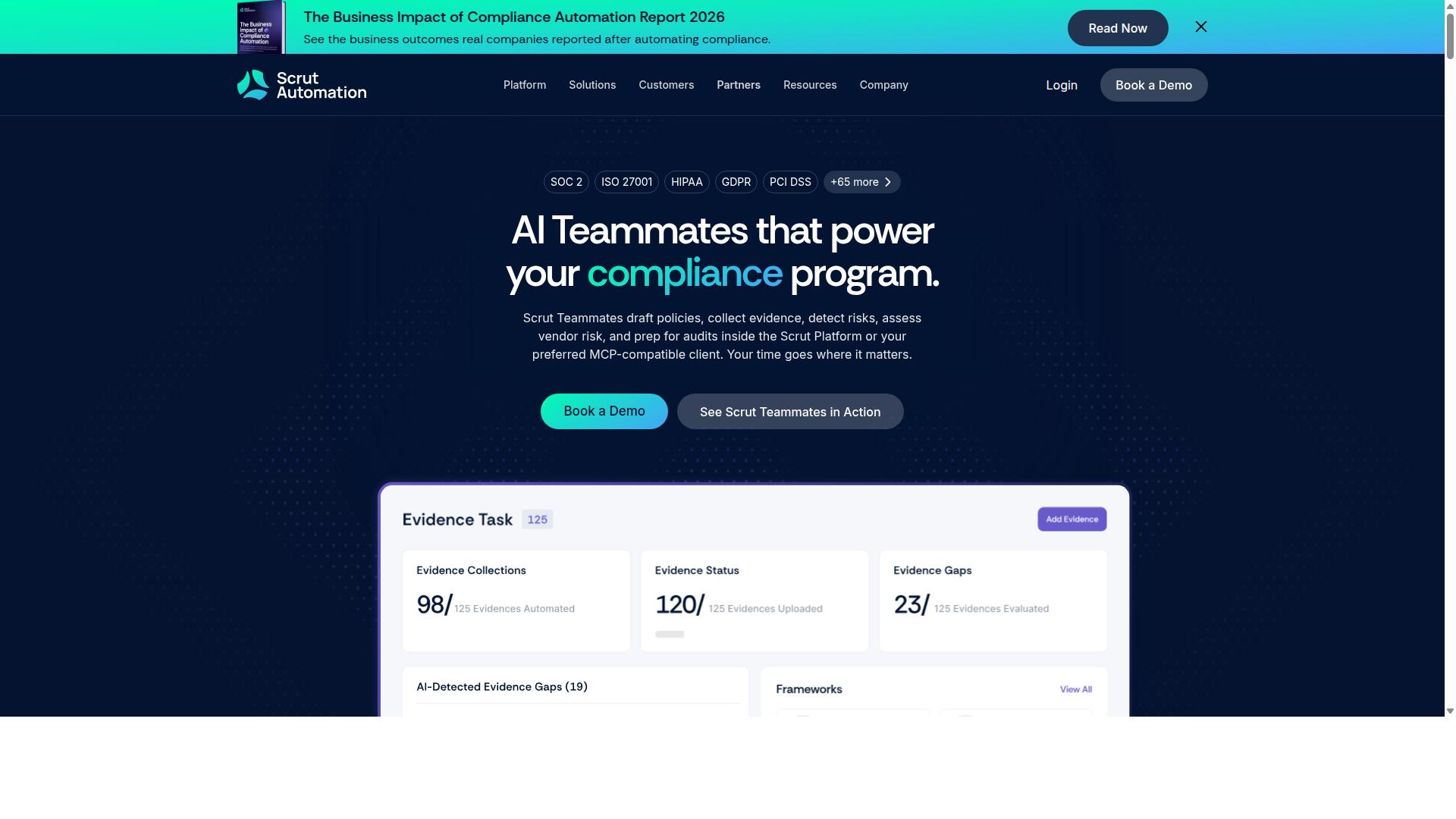
Scrut Automation targets mid-market security and privacy compliance workflows. The platform focuses on evidence collection, control monitoring, and policy management for organizations working with multiple compliance frameworks at once.
Pre-built compliance templates help teams map requirements for SOC 2, ISO 27001, HIPAA, GDPR, PCI DSS, and NIST AI RMF. Risk registers track identified threats while vendor risk management tools assess third-party security posture through structured assessments.
Continuous runtime security monitoring and asset inventory tracking provide ongoing visibility into the control environment. Employee training modules and user privilege validation features support the human side of compliance programs.
Scrut lacks advanced conditional logic found in dedicated workflow automation tools. The platform also does not offer AI-assisted process creation capabilities that some competitors provide for building complex approval sequences.
5. Nintex
Nintex extends SharePoint and Microsoft 365 environments with drag-and-drop workflow builders. The platform targets organizations already invested in Microsoft infrastructure.
SharePoint integration stands as the primary strength. Teams can build forms and workflows directly inside familiar interfaces without switching contexts.
On-premise deployment remains available through Nintex Automation K2. This option supports organizations with strict data residency requirements or legacy system constraints.
Licensing costs can escalate quickly. User count increases often trigger higher tier requirements and additional fees across different modules.
Capabilities include document automation and robotic process automation. Solutions serve HR, finance, IT, and sales departments across government, healthcare, and manufacturing sectors.
The platform also offers Nintex for Salesforce. This separate product handles workflow automation and document generation inside the Salesforce ecosystem.
6. LogicGate Risk Cloud
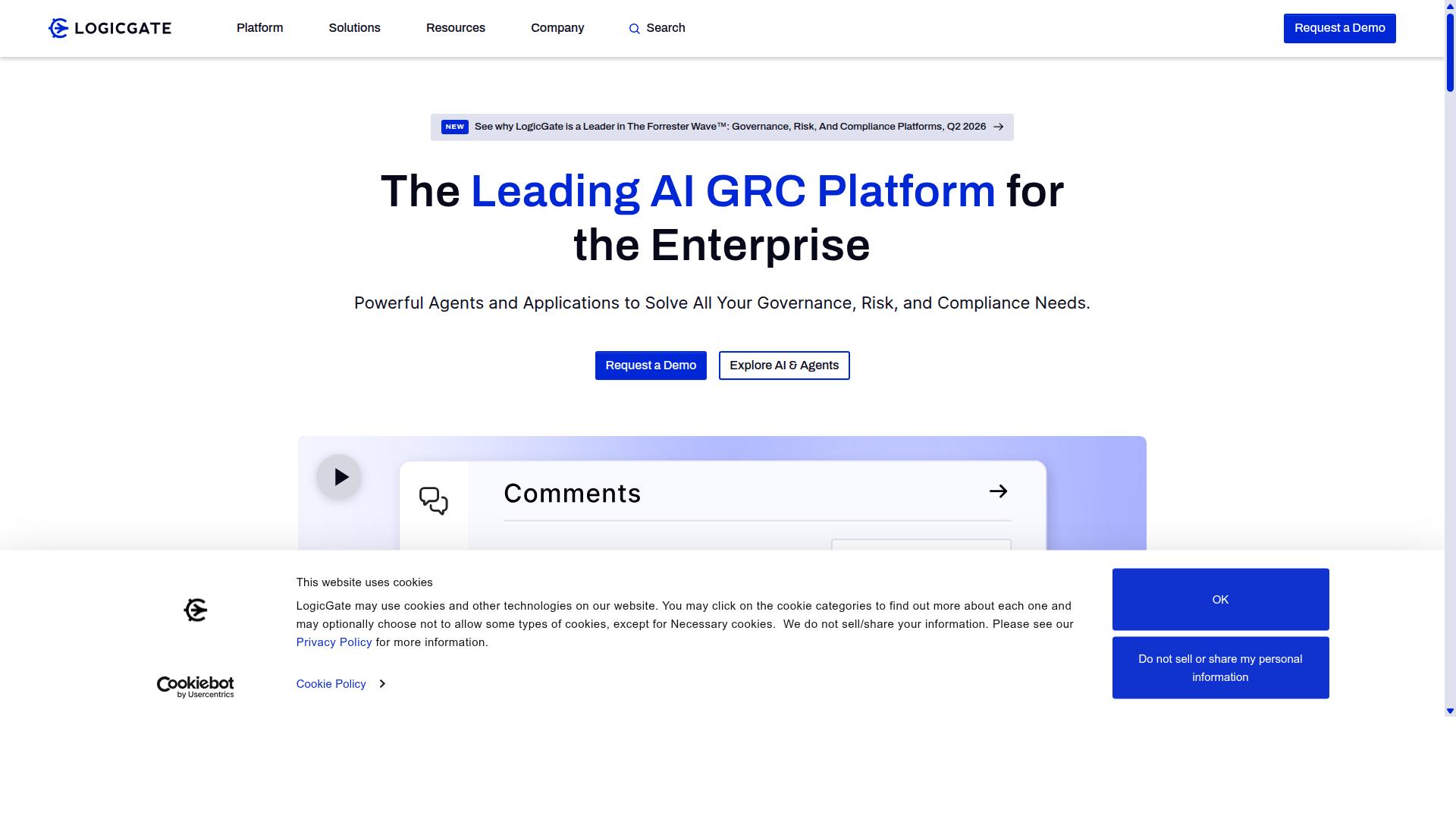
LogicGate Risk Cloud provides configurable risk and compliance applications on a low-code platform. Organizations use the system to build structured processes for governance and regulatory needs. The platform supports automated workflows for complex compliance requirements.
Many teams apply the tool for SOX compliance through ready-made templates. These handle control documentation, testing cycles, and evidence collection. The system also supplies GDPR templates for data mapping and privacy impact assessments.
Each template contains predefined task sequences and approval steps. Users can adjust these sequences to match internal policies. The platform records changes automatically for audit purposes.
LogicGate Risk Cloud requires more upfront configuration than out-of-the-box workflow tools. Teams must define data fields, access rules, and notification triggers before processes run smoothly. This setup phase demands dedicated attention from technical staff.
The platform suits enterprises that need highly customized risk frameworks. Smaller teams may find the initial build time longer than simpler alternatives. The trade-off appears in the level of control over compliance structures.
7. Camunda
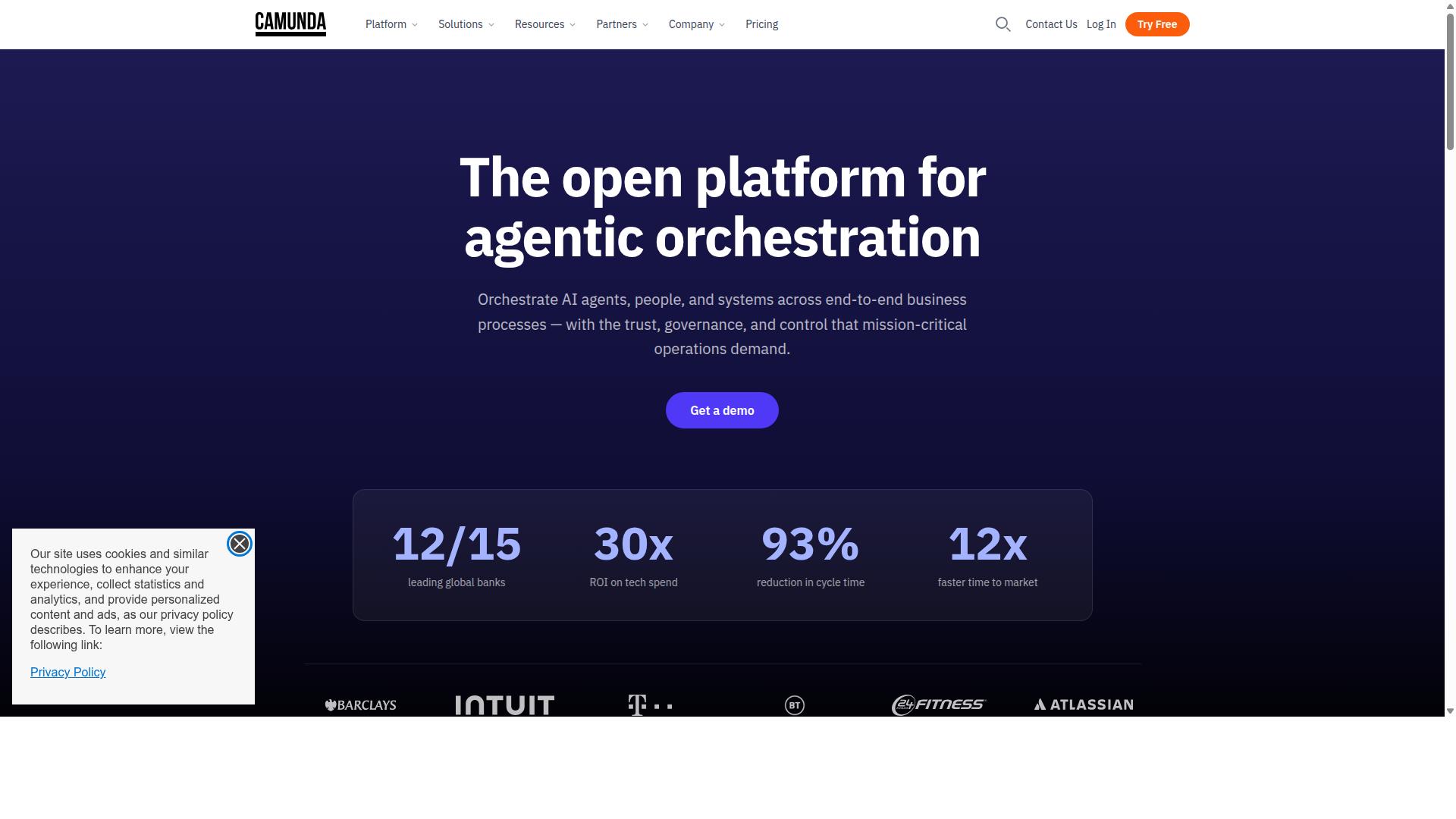
Camunda delivers open-source BPMN engine capabilities for developers building mission-critical process applications. This platform helps organizations coordinate people, systems, and devices through precise workflow automation.
The tool stands out for its BPMN 2.0 standard support, which provides a widely recognized notation for process mapping. Teams can design complex workflows that follow established industry conventions and maintain consistency across projects.
Camunda offers strong Java/Spring Boot integration that appeals to development teams working within those environments. This technical foundation supports deterministic, dynamic, and agentic orchestration approaches for handling both predictable and variable process paths.
Non-technical users may find the learning curve steep when adopting this platform. The focus on developer-centric features and BPM standards means business users often require technical assistance to create and modify workflows.
Organizations considering Camunda typically need existing development resources or willingness to invest in training. The platform suits teams already comfortable with Java ecosystems and looking for scalable automation solutions.
How to Choose the Right Option
Match platform capabilities to your team size, compliance scope, and integration requirements.
Start by identifying the compliance frameworks that apply to your industry. Operations, Compliance, and IT teams should review regulations such as ISO standards, GDPR, or financial reporting requirements before evaluating any workflow automation solution.
Next, count the integrations you need and how many user seats the organization will require. Different BPM platforms offer varying connector availability with tools like Microsoft 365, SharePoint, and Power Automate.
Finally, compare total cost of ownership across platforms. Consider automation limits, user scaling costs, and feature tiers when calculating ongoing expenses.
Operations teams typically focus on workflow efficiency and task automation across departments. Compliance teams examine audit trails and document control capabilities. IT teams assess security certifications and API connectivity options.
This three-step framework helps organizations select the right alternative to Flowforma based on actual business needs rather than feature lists alone.
Final Verdict
Process Street stands out when organizations need both rapid workflow deployment and audit-ready proof. Many alternatives to Flowforma focus on features, but few match the combination of speed and compliance.
Research suggests that companies using Process Street achieve 30% faster documentation while cutting setup time by 75% or more. These numbers come from actual customer outcomes, including IMCD UK, which reported the setup improvement.
Trusted by over 3,000 companies and 1 million users, Process Street delivers enterprise-grade security. It holds SOC 2 Type II certification, ISO 27001 certification, HIPAA compliance with BAA available upon request, GDPR compliance, CCPA compliance, and AWS CIS compliance.
The platform also maintains a five-minute average response time and 98% customer rating. Data is never used to train AI models, which matters for organizations with strict privacy requirements.
When comparing workflow automation options, consider which tool provides both speed and documented proof. Process Street delivers both through its proven track record and compliance certifications.
Readers evaluating alternatives to Flowforma should request a demo through the listed contact channels. This lets teams see how the platform handles their specific approval workflows and compliance needs.
Recommended Resources: